
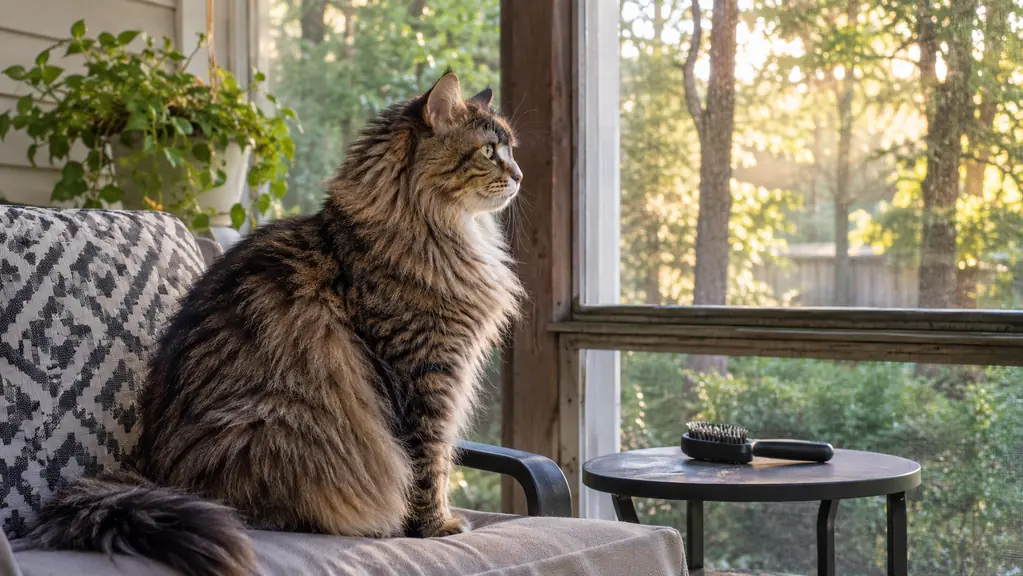
The first time I ran the FURminator down Barnaby's back and came away with a handful of undercoat, I stood in my kitchen with my mouth open. He is an 8-year-old brown tabby Maine Coon, about 18 pounds, with a thick ruff and long britches on his back legs. For years I brushed him with whatever was in the drawer, and for years I found tufts of fur under the dining table, on the stairs, and in the corners of the screened porch. The tool that finally made a difference was the FURminator undercoat deShedding tool for medium and large long hair cats over 4.5 kg. I did not expect much. I had a drawer full of brushes that did not expect much either.
The problem was not that Barnaby sheds. Maine Coons shed. The problem was the undercoat. If I skipped a week of brushing, I found mats behind his back legs, and he got cranky when I tried to work them out. He is a gentle cat, but he has opinions about his britches. Our vet has seen him for his yearly checkup and knows about the stiffness when he jumps onto the bed. For grooming, the advice was simple: keep him brushed, keep sessions short, and do not let mats get ahead of me. That is easier said than done when the brush just skims the surface.
What the FURminator does differently is reach the loose undercoat. The tool has a stainless steel edge and a FURejector button that releases the collected hair with a push. The handle is ergonomic and non-slip, which matters when your cat is 18 pounds and decides to lean. The maker says it removes up to 90% of loose hair and helps reduce hairballs. I cannot verify the percentage in my kitchen, but I can tell you what came off Barnaby in the first ten minutes.
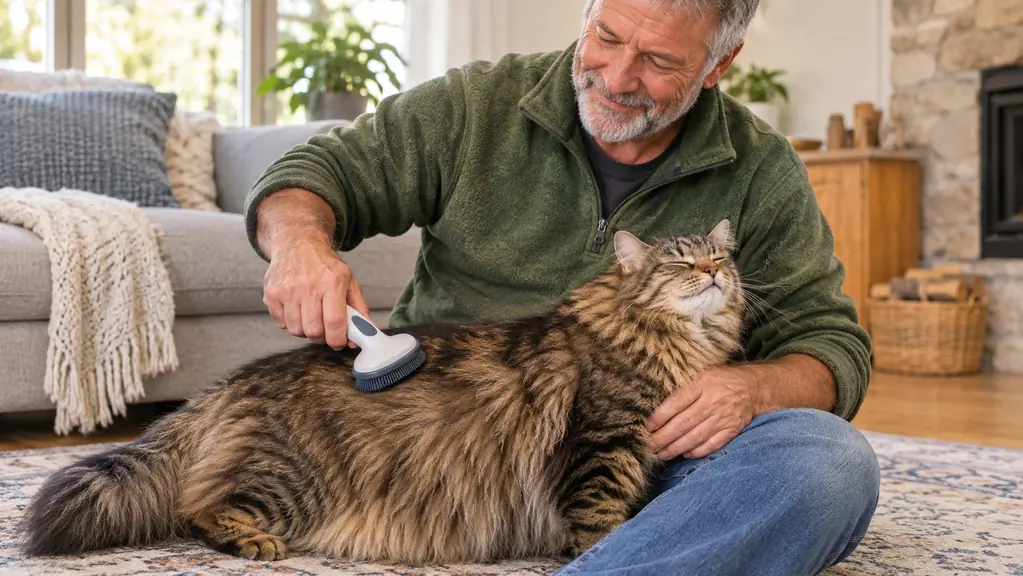
I use it on dry fur, one to two times a week, for 10 to 20 minutes per session. That is what the directions say, and it is about right for us. I start at his shoulders and work back in the direction the fur grows, using light strokes. I do not press. I do not dig. Barnaby stands on a rug in the living room while I work, and when he walks away, I let him go. The sessions are short enough that he comes back.
The first session filled the tool twice. I pushed the FURejector button and a clump of undercoat came off in one piece. I will not pretend I was not pleased. The next morning there was less fur on the stairs. A week later, the mats behind his back legs were smaller and easier to comb out with my fingers. He still sheds, because he is a cat, but the amount of loose hair in the house went down.
A week later, the mats behind his back legs were smaller and easier to comb out with my fingers.
If the fur is winning, start at the undercoat
Barnaby is 18 pounds with a long coat, which is the size and coat this tool is made for. I keep it by the chair and use it twice a week.
Amazon Check Today's Price on Amazon →The biggest change is not the fur on the floor. It is the routine. Barnaby is getting older, and he is a little stiff when he jumps onto the bed. Grooming him on the floor is easier for both of us. I sit on the rug, he leans against my knee, and I work in sections. The non-slip handle helps when he shifts his weight. The FURejector button means I am not stopping to pull hair out of the tool with my fingers every few strokes.
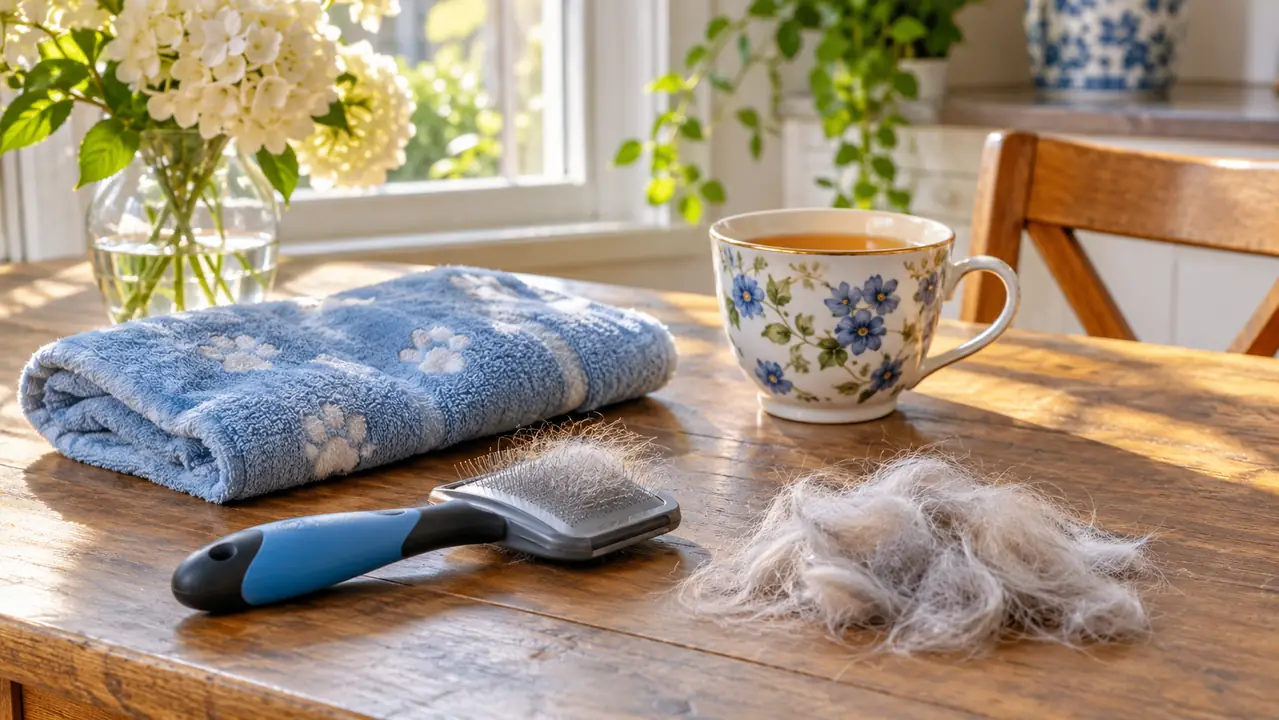
I still keep a slicker brush in the drawer. A slicker brush is good for the surface and for finishing, and I use one on his tail and around his face where I want a lighter touch. The FURminator is for the undercoat on his back, sides, and hindquarters. I do not use it on his face, his belly, or his private areas. I do not use it on wet fur. I do not use it every day. Twice a week is enough for Barnaby, and more than that would be too much for his skin and his patience.
What I do not love is that it is easy to overdo. The tool is effective, and effective tools invite you to keep going. I set a timer on the stove for 15 minutes. When it rings, I stop, even if Barnaby is still standing there. I also do not yank at a mat. If a mat is tight, I work at it over a few sessions or I ask our vet what to do. A mat is not a problem to solve with force.
The other thing I would say is that this is not a tool for a kitten or a small cat. The listing is for medium and large cats over 4.5 kg with a long coat. Barnaby is 18 pounds, so he fits. If you have a short-haired cat, this is not the right tool. If you have a cat with a skin condition, ask your vet before you start. I am not a groomer. I am a retired school librarian who got tired of fur on the stairs, and I can only tell you what worked in my house.
What I'd Tell You If We Were Sitting at My Kitchen Table
I would tell you to brush on dry fur, keep the sessions short, and use light strokes. I would tell you to start at the shoulders, work back, and let the cat leave when he wants to leave. I would tell you to keep the tool by the chair so you actually use it, and to set a timer so you do not overdo it. I would tell you that the FURminator will not solve every grooming problem, and it is not a substitute for a vet if your cat is itchy, losing patches of fur, or acting sore. But if you have a large long-haired cat and a house full of loose tufts, it is the tool that finally made a difference for Barnaby and me.
The tool I keep by the chair
For a large long-haired cat, twice a week is enough. Check the current listing for your cat's size and coat.
Amazon Check Today's Price on Amazon →