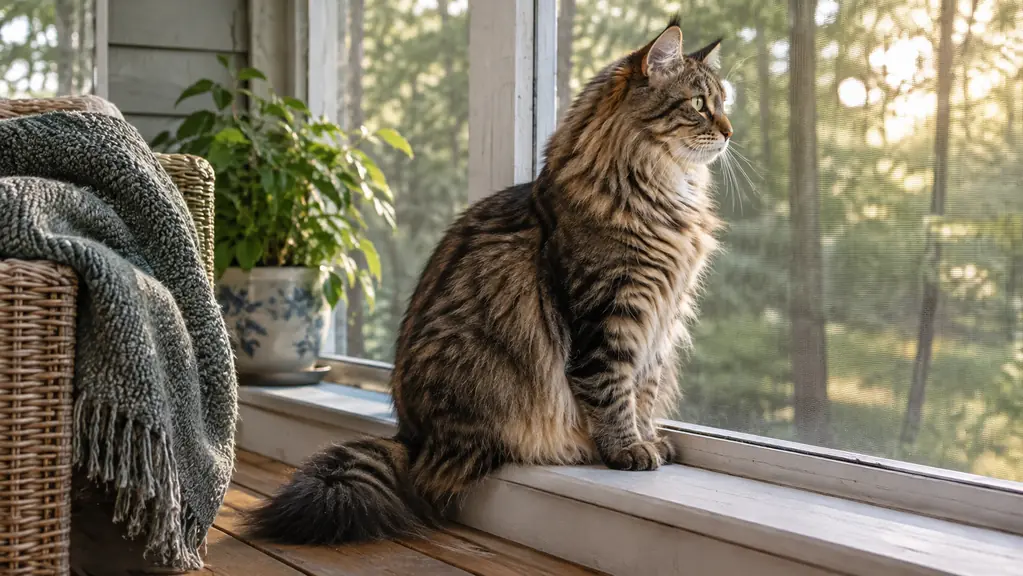
Barnaby is eight, about eighteen pounds, and roughly the size of a small dog when he stretches out on the porch. He is also the reason I own three lint rollers and a vacuum with a hose attachment I have never once used on a car. Maine Coons shed the way a big cat with a big coat should, and for years I brushed him with a plain bristle brush that only ever touched the top layer. I would finish, he would look neat, and two days later the rug by the door would be wearing a fur sweater of its own. The FURminator undercoat tool is the first thing I used that reached the hair actually causing the trouble.
I am not a groomer and I am not going to pretend this is complicated. What follows are ten reasons the tool earns its spot on the hall shelf, in roughly the order I noticed them over the past couple of years. Some are about Barnaby. Some are about my floors. One is about my back. All of them come from using it on one cat in one small house outside Bangor, so take them the way you would take advice from a neighbor: useful, not gospel.
The brush that finally reached Barnaby's undercoat
The FURminator undercoat tool is sized for medium and large long-haired cats over 4.5 kg, which is the category a Maine Coon lives in. Rated 4.6 out of 5 across more than 10,800 Amazon reviews.
Amazon Check Today's Price on Amazon →The Ten Reasons, In the Order I Noticed Them
It reaches the undercoat, not just the shine on top
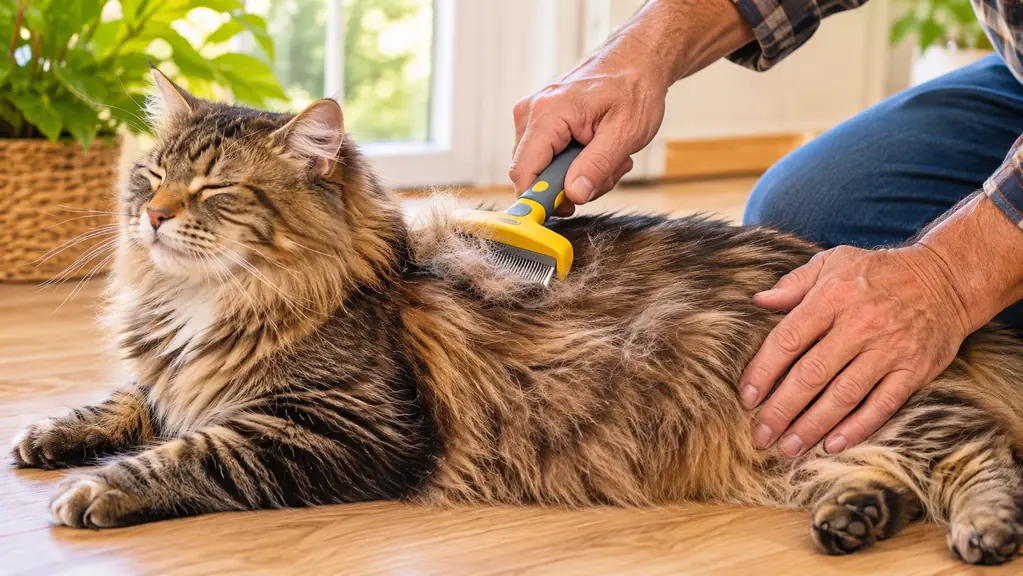
A Maine Coon coat is two coats stacked on one cat. The long guard hairs are what you see and what a bristle brush pushes around. The soft undercoat underneath is what mats, what sheds, and what ends up in the corners. The FURminator tool has a stainless steel edge that goes under the top layer and lifts the loose stuff out, and the listing puts the claim at removing up to 90% of loose hair. I cannot verify a percentage on my kitchen scale, but the pile on the floor after ten minutes is not subtle.
Cuts down the hairballs he leaves where I walk barefoot
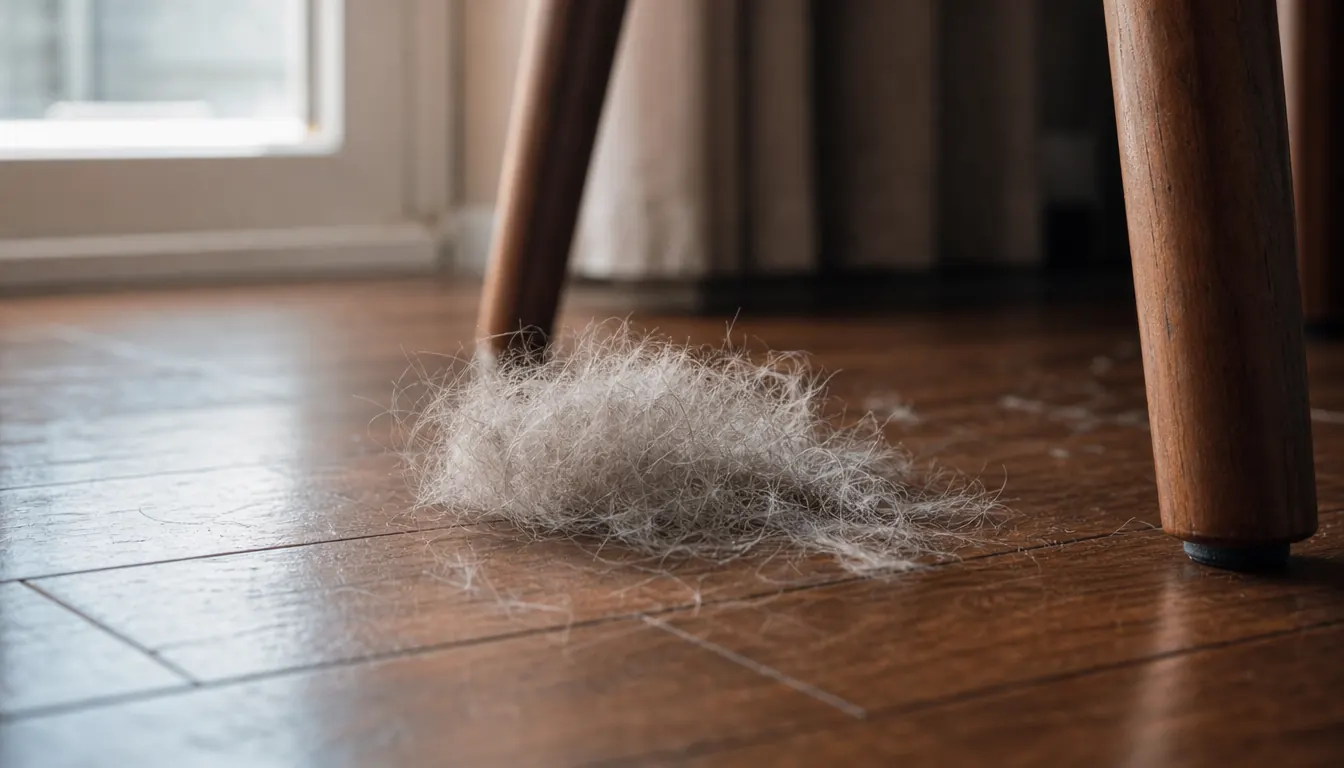
Every Maine Coon owner knows the sound of a cat bringing up a hairball at two in the morning. Swallowed loose hair plays a part, and the listing for this tool ties regular deshedding to fewer hairballs. I am not a vet and I am not making a medical claim, but I can report what changed in this house: the morning surprises on the rug went from a few a week to a few a month. If your cat brings up hairballs often, ask your vet, because plenty of things besides hair cause that.
Ten minutes twice a week is the whole routine
The directions say one to two times a week, ten to twenty minutes a session, on dry hair. That is the entire job. I do it Sunday and Wednesday, usually while Barnaby is half asleep on the porch. Twenty minutes is the outside number; a cooperative cat takes closer to ten. What surprised me is how fast it stopped being a chore and became the ten minutes of the day when the cat is definitely paying attention to me.
The FURejector button keeps the session moving
This is the detail I did not expect to care about and now would not give up. A button on the back releases the collected hair off the edge in one push, so you are not standing there picking a felted mat out of the teeth with your fingers. On a long-haired cat you fill that edge fast. Being able to clear it without stopping means Barnaby stays settled instead of deciding the brush is a wrestling match and walking off.
It is actually sized for a cat this big
Most cat brushes are built for a nine-pound tabby. A Maine Coon is a different job. This version is made for medium and large cats over 4.5 kg with a coat longer than 5 cm, and the head is wide enough that I am not making forty passes down a twenty-inch back. The whole tool is listed at 1.97 by 5 by 8.82 inches and 5.7 ounces, so it stays light in the hand.
Fewer mats behind his back legs
The britches are where Barnaby's coat goes wrong if I get lazy. Long hair behind the back legs rubs together when he sits, and a week of neglect turns into a knot that pulls when I try to work it out. Regular passes through that area, with one hand steadying the skin so the edge is not tugging, have kept the mats from forming at all. That is worth more to both of us than any amount of fixing after the fact.
The handle does not slip when he decides he is finished
Barnaby is gentle, but he is eighteen pounds of opinion and he has a limit. The handle has a non-slip grip that stays put even when he shifts his weight or turns around to see what I am doing. A brush that rotates in your hand mid-stroke catches the coat, and a catch is what ends a grooming session early. This one has not done that to me yet, and I have been using it long enough to be a fair judge.
The stainless steel edge is still sharp after two years
Cheap grooming tools go dull and start pulling instead of lifting, and a dull tool is worse than none because the cat learns to hate the whole idea. The edge on this FURminator tool is stainless steel, which is why I have not had to replace it. I rinse it under warm water, dry it on a towel, and put it back in the drawer. That is the full maintenance routine. Two years in, it still takes hair off in one pass.
Less hair on everything I own
This is why the tool stays out instead of living in a drawer. The porch cushions, the dark chair in the living room, the back seat of my car, the shoulder of every sweater I wear in February. When the loose undercoat comes out in a session, it does not come out later on the furniture. I still vacuum. I still keep a lint roller in the kitchen. But I am no longer doing either of them every single day, and at sixty-three I have decided that counts.
It makes the vet's coat check a shorter conversation
Our vet gives Barnaby a once-over twice a year and always runs her hands down his back and flanks to check for mats and skin trouble. A matted coat turns that into a wrestling match and a shaved patch. A coat brushed twice a week turns it into thirty seconds. That is not a health claim, it is just what the appointment looks like now. Anything that saves a big cat a stressful afternoon is worth the shelf space.
The proof is not the shine on top. It is the pile of undercoat on the floor after ten minutes.
What I'd Skip
I would skip the idea that this replaces brushing. It is the brushing, or at least the part of it that matters. If you are looking for a tool that lets you ignore your cat's coat for a month, this is not that and neither is anything else on the shelf.
I would also skip using it on a wet cat or on a coat full of tangles. The directions say dry hair for a reason. Work out knots with your fingers or a wide-tooth comb first, and go easy around the belly, the armpits and anywhere the skin sits thin. Barnaby will let me do his back and sides all day. The belly is a two-second pass and then we are done, and that is fine by both of us.
And the warning. If your cat is over-grooming, has bald patches, is scratching, or is bringing up hairballs more than occasionally, that is a vet question, not a grooming question. A tool does not fix a skin problem. Ours got seen, and I would tell you to do the same.
If your Maine Coon leaves a fur sweater on the rug, start here
The FURminator undercoat tool for medium and large long-haired cats over 4.5 kg is rated 4.6 out of 5 from more than 10,800 Amazon reviews. Use it one to two times a week on dry hair for ten to twenty minutes, and keep the vet in the loop on anything that looks like skin trouble.
Amazon Check Today's Price on Amazon →